1. WHO Guidelines for Healthcare Waste Management
The World Health Organization (WHO) provides the most fundamental global framework for the management of healthcare waste. Primarily, the WHO focus is not only on the final disposal of waste but also on the entire lifecycle, starting from segregation at the source to safe final treatment.
According to WHO recommendations,
healthcare waste must be categorized into specific streams to ensure that each type receives the appropriate treatment method. For instance, infectious waste, sharps, and chemical waste require vastly different handling protocols to prevent cross-contamination and accidental exposure.
In terms of incineration technology, the WHO emphasizes several critical safety and environmental pillars:
Complete Pathogen Destruction:
- The primary goal of any medical waste incineration process must be the total elimination of infectious agents. Therefore, the system must maintain high-temperature combustion to ensure that all biological hazards are neutralized.
- Emission Control and Air Quality: Furthermore, the WHO highlights the importance of controlling the release of toxic by-products. In particular, modern facilities must implement robust Air Pollution Control Systems (APCS) to mitigate the release of heavy metals and organic pollutants.
- Safe Handling and Segregation: Moreover, the WHO stresses that even the most advanced incinerator cannot compensate for poor waste segregation. As a result, successful waste management programs must integrate efficient segregation protocols at the point of generation.
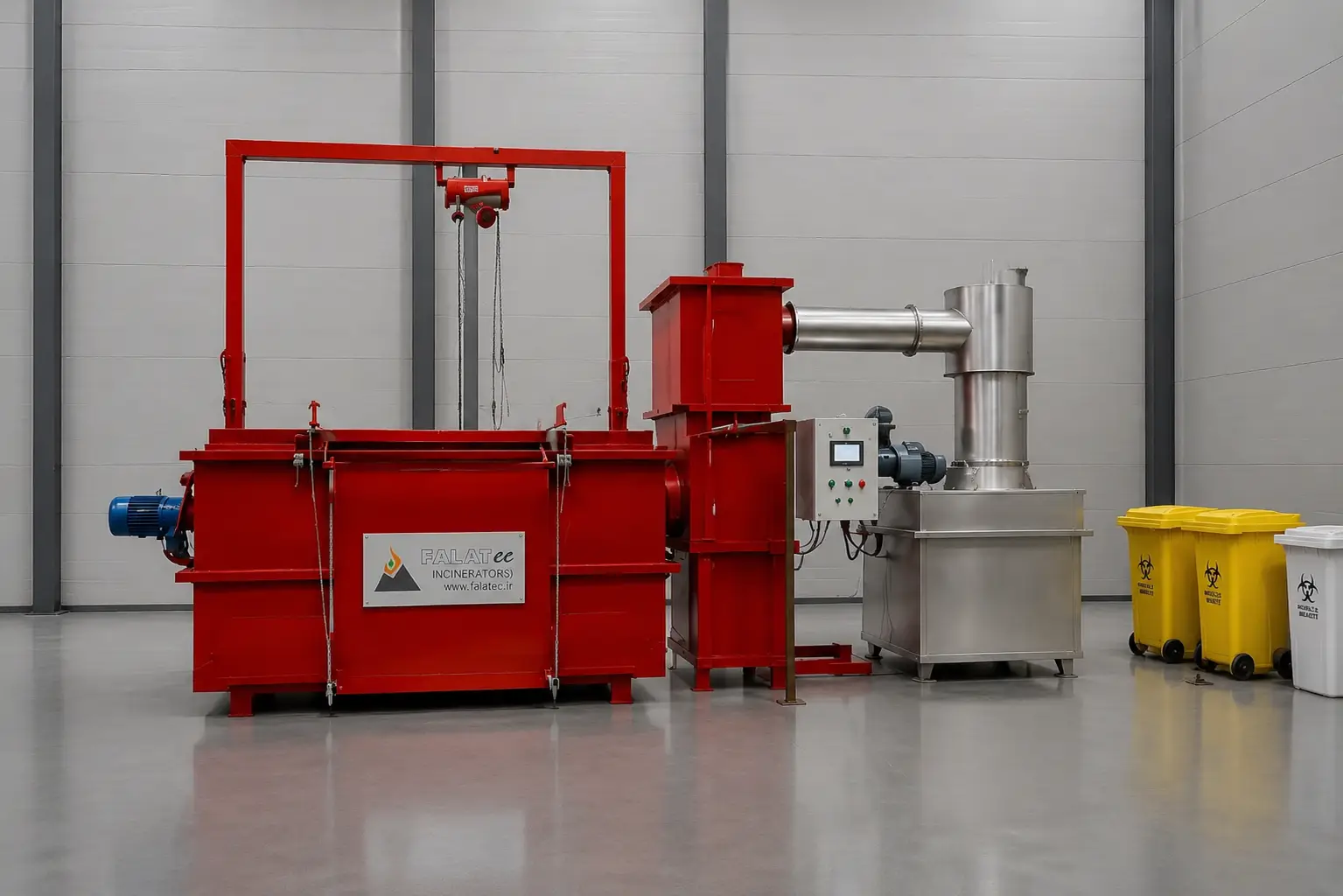
In summary, while the WHO does not mandate a specific brand or model of incinerator, it establishes the rigorous technical and operational benchmarks that all modern waste treatment technologies, such as those engineered by Falatec Energy, must strive to exceed.
2. EU Waste Incineration Directive (WID) & Industrial Emissions Directive (IED)
The European Union (EU) maintains some of the most stringent environmental regulations in the world regarding waste incineration. Primarily, these regulations are designed to prevent the release of hazardous substances into the atmosphere, with a heavy focus on controlling dioxins, furans, and heavy metals.
Historically, the Waste Incineration Directive (WID) set the foundation for emission limits. However, these requirements have been further strengthened and integrated into the more recent Industrial Emissions Directive (IED). This shift reflects the EU’s commitment to the Best Available Techniques (BAT) approach, which mandates that industrial facilities must utilize the most effective and advanced technologies available to minimize their environmental footprint.
To achieve compliance with EU standards, incineration systems must adhere to several rigorous technical requirements:
- High-Temperature Combustion: In particular, the secondary combustion chamber must maintain a minimum temperature of 850°C (or even 1,100°C for certain hazardous wastes) for a specific residence time. As a result, this ensures the complete thermal destruction of complex organic molecules, such as dioxins.
- Stringent Emission Limits: Furthermore, the IED imposes strict limits on a wide array of pollutants, including Nitrogen Oxides (NOx), Sulfur Dioxide (SO2), Hydrogen Chloride (HCl), and Particulate Matter (PM). Consequently, advanced Air Pollution Control Systems (APCS) are not optional; they are essential components of the system.
- Continuous Emission Monitoring (CEMS): Moreover, the EU requires continuous monitoring of certain pollutants to ensure that the facility remains within legal limits at all times. This real-time data provides transparency and ensures long-term environmental protection.
In conclusion, designing an incinerator that meets EU-level standards requires a sophisticated engineering approach. By integrating advanced combustion control and multi-stage flue gas cleaning, manufacturers like Falatec Energy ensure that their systems not only meet current regulatory requirements but also remain resilient against future environmental legislation.
Critical Technical Parameters in Standardized Incineration
Engineering a medical waste incinerator that complies with global standards requires precise control over thermodynamic and chemical parameters. Indeed, minor deviations in temperature or gas retention time can lead to incomplete combustion and regulatory non-compliance.
Therefore, the following key technical parameters must be strictly managed in any advanced waste-to-energy or incineration system:
| Parameter | Recommended Value (Standard Regulations) | Critical Function / Purpose |
|---|
| Primary Chamber Temp. | 650°C – 850°C | Pyrolysis and controlled volatilization of solid waste. |
| Secondary Chamber Temp. | Min. 850°C (1100°C for hazardous waste) | Complete thermal destruction of gas-phase organic pollutants (Dioxins/Furans). |
| Gas Residence Time | Min. 2.0 Seconds | Ensures sufficient time for oxidation of combustion gases in the secondary chamber. |
| Flue Gas Oxygen (O2) | 6% – 12% | Provides the necessary excess air for complete combustion. |
| Particulate Matter (PM) | < 10 mg/Nm³ (EU Standard) | Controlled via advanced bag filters or electrostatic precipitators. |
1. Combustion Temperature and Thermal Destruction
The relationship between temperature and chemical destruction is absolute. Specifically, the secondary combustion chamber must operate at a minimum of 850°C with an excess oxygen level of at least 6%. Furthermore, if the waste contains chlorinated organic compounds (exceeding 1%), the regulatory standard mandates raising this temperature to 1100°C. Consequently, this high-temperature zone guarantees the breakdown of complex molecular bonds.
2. Gas Residence Time (The 2-Second Rule)
Maintaining high temperature alone is insufficient if the combustion gases pass through the chamber too quickly. For this reason, international standards like the EU Industrial Emissions Directive (IED) enforce a minimum gas residence time of 2.0 seconds in the secondary chamber. By achieving this, the system ensures that gaseous emissions are fully oxidized before entering the cooling and filtration stages.
3. Air Pollution Control Systems (APCS)
In addition to primary combustion control, modern incinerators must be equipped with multi-stage flue gas cleaning systems. In particular, these systems typically include:
- Dry or Semi-Dry Scrubbers: To neutralize acid gases such as Hydrogen Chloride (HCl) and Sulfur Dioxide (SO2).
- Activated Carbon Injection: Designed specifically to adsorb heavy metals (Mercury, Lead) and remaining trace dioxins.
- Bag Filters (Fabric Filters): To capture ultra-fine particulate matter (PM10 and PM2.5).
By implementing these integrated technologies, systems designed by Falatec Energy achieve a balance between high-efficiency waste destruction and strict environmental preservation.
Medical waste incineration must follow strict environmental standards. First, the primary chamber operates between 650°C and 850°C to initiate combustion. However, this stage alone cannot destroy all hazardous compounds. Therefore, the secondary chamber must reach at least 850°C. In addition, the combustion gases must remain in the chamber for at least two seconds. As a result, toxic compounds such as dioxins and furans are completely destroyed.
Frequently Asked Questions regarding Incineration Standards
Q1: What is the minimum temperature required for medical waste incineration?
According to global standards such as WHO and EU regulations, the required temperature depends on the stage of the combustion process. First, the primary chamber typically operates between 650°C and 850°C, where the initial combustion and pyrolysis of waste occur. However, this stage alone is not sufficient for complete pollutant destruction. Therefore, the secondary combustion chamber must maintain a minimum temperature of 850°C. Furthermore, if the waste contains chlorinated compounds, the temperature must increase to 1100°C. As a result, these conditions ensure the complete thermal destruction of hazardous organic pollutants.
Q2: Why is the 2‑second retention time rule critical for gas emissions?
The 2‑second residence time rule plays a fundamental role in emission control. During combustion, waste generates volatile organic compounds and other hazardous gases. If these gases exit the combustion zone too quickly, they may not be completely oxidized. Therefore, international environmental regulations require that flue gases remain in the secondary chamber for at least two seconds at temperatures above 850°C. Consequently, this controlled residence time allows complete oxidation of toxic compounds before the gases move to the filtration system.
Q3: How do modern incinerators control dioxin and furan emissions?
Modern incineration systems use a multi‑stage emission control strategy. First, high temperatures in the secondary chamber destroy most dioxins and furans. However, these compounds can reform during the cooling phase of flue gases. For this reason, advanced incinerators implement rapid gas cooling (quenching) to prevent their reformation. In addition, activated carbon injection is used to capture remaining trace pollutants. Finally, the flue gas passes through high‑efficiency bag filters, which remove particulate matter and residual contaminants.
Q4: What is the difference between EU and US EPA standards for incineration?
Both regulatory systems aim to reduce environmental impact, however, their regulatory approaches differ slightly. In the European Union, the Industrial Emissions Directive (IED) enforces strict emission limits and continuous monitoring requirements. Meanwhile, the United States EPA focuses on the concept of Maximum Achievable Control Technology (MACT). As a result, facilities must implement the most advanced emission control technologies available for their category. Although the frameworks differ, both systems ultimately pursue the same goal: minimizing atmospheric pollution from incineration facilities.
Q5: Can medical waste incinerators be integrated with Waste‑to‑Energy systems?
Yes, large‑scale incinerators can be integrated with waste‑to‑energy (WTE) technologies. During the combustion process, a significant amount of thermal energy is generated. Instead of releasing this heat, modern systems recover it through waste heat recovery boilers. Subsequently, the produced steam can generate electricity or supply industrial processes. Therefore, waste incineration can simultaneously address waste management challenges while contributing to sustainable energy production.